=Nothing to see here
Nothing to see here
Welcome to my travel guide to interesting but unimpressive places.
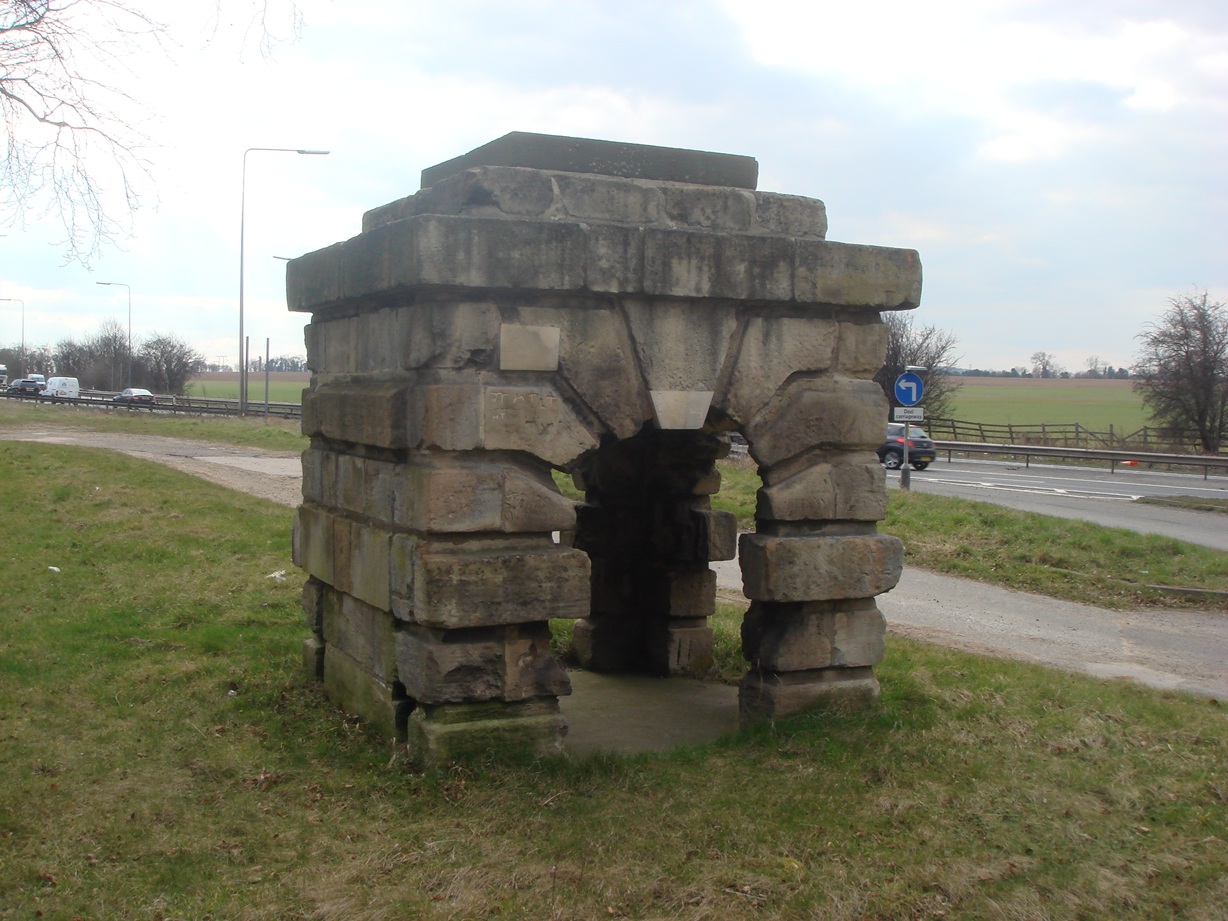
Robin Hood's well
https://maps.app.goo.gl/Hkw1VL1AedhbiSLA8
This mostly treeless truckstop on the A1 is the most likely setting for most of the old tales of Robin Hood of Barnsleydale
(yes, Barnsleydale, not Sherwood Forest is the place most often referenced in the Ballads of Robin Hood).
There's a nice stone springhead here, now dry, and moved from its original location. It's actually a comparatively recent folly.
To appreciate this spot, you need to understand that underneath the modern asphalt of the A1 is a Roman Road,
and in the middle ages, this was the main route north from London to York. Most of the region was a continuous forest*,
so there probably wasn't much distinction between the forests of Barnsley and Sherwood back then. This is the point at which the
Roman road crosses Barnsleydale. But Nottingham still gets all the tourists :( .
Colchester
Actually, there is quite a lot to see here, but one thing you won't see is any trace of King Arthur.
This is after all the old Roman city of Camulodunum, at the time, the biggest city in Britain. "Camulodunum sounds a lot like "Camelot", and is a much more likely
place to find a British warlord
of the dark ages, rather than Tintagel, which wasn't even built then. It's true that most of the legends of Arthur survived with the refugee populations
of Wales and Cornwall, but the massive fortifications cutting across the Icknield way, the Devil's ditch, Fleam dyke, Brent ditch etc..
Marking the shifting borders
of Saxon and Celtic territory, show that East Anglia is where the action was really happening. The Anglo Saxons of Western Britain were mostly assimilated indigenous
Britons (the house of Wessex was founded by Cerdic, a corruption of the Celtic name Caradoc).
More about Colchester at this link′
*Historians differ as to exactly how much mediaeval "forest" was truly wild. It seems to have included a significant amount of farmland.
There may also have been significant areas of trees pollarded for firewood, with cows grazing under them.
Back to main page